
Lesson 5. When to Initiate HBV Treatment
Associate Editor
Professor of Medicine
Division of Allergy & Infectious Diseases
University of Washington
Associate Editor
Associate Professor of Medicine
Division of Allergy & Infectious Diseases
University of Washington
Editor-in-Chief
Professor of Medicine
Division of Allergy & Infectious Diseases
University of Washington
Learning Objective Performance Indicators
- Identify and achieve primary goals of therapy for the treatment of chronic HBV infection
- List three key factors to consider when initiating treatment for chronic HBV infection
- Recognize the four phases of immune responses that can occur with HBV infection
- Evaluate liver disease severity using noninvasive testing methods
- Initiate HBV treatment based on key recommendations in major guidance documents
Background
Chronic hepatitis B is a clinically silent and indolent disease with a long period of latency before significant adverse outcomes manifest, such as cirrhosis, decompensated liver disease, or hepatocellular carcinoma (HCC).[1] The hepatitis B virus (HBV) is not directly cytopathic to hepatocytes; the disease occurs when recurrent cycles (flares) of immune-mediated inflammation and liver injury result in the abnormal formation of collagenous scar or fibrosis that progresses over time.[2] Most individuals with HBV infection remain without symptoms or clinical manifestations unless cirrhosis-related complications develop.[2] Because early stages of cirrhosis are typically asymptomatic, it often goes undetected. In the following discussion, we will review the goals for HBV treatment and clinical indications for initiating antiviral therapy for chronic HBV. For the purposes of initiating HBV treatment, most experts and guidelines define chronic HBV infection as the presence of hepatitis B surface antigen (HBsAg) for at least 6 months.[3]
Goals of Therapy with Treatment of Chronic HBV
When considering treatment for persons with chronic HBV, it is important to consider the following goals of therapy.
- Immediate Goal: The most immediate goal for the treatment of persons with chronic HBV is to reduce hepatic inflammation (as measured by alanine aminotransferase [ALT] and aspartate aminotransferase serum aminotransferases [AST] levels) and to achieve virologic suppression (as indicated by plasma HBV DNA levels below the limit of detection).
- Intermediate Goal: With sustained virologic suppression and normalization of ALT, additional intermediate goals should include improvement in serologic and histologic markers. For persons with a positive hepatitis e antigen (HBeAg), the loss of HBeAg and change of antibody to HBeAg (anti-HBe) from negative to positive is referred to as “HBeAg seroconversion” and indicates reduced intrahepatic HBV replication, and portends a more favorable prognosis. With sustained virologic suppression, it is expected that persons with chronic HBV will also have hepatic histologic improvement, manifested by histologic evidence of regression of inflammation and fibrosis on liver biopsy.[4,5]
- Long-Term Goals: The ultimate and most important goal for treating persons with chronic HBV is to prevent the clinical complications of this infection, which include cirrhosis, hepatocellular carcinoma, and liver-related mortality.[6,7,8]
- Prevention of HBV Transmission: When treating pregnant mothers with HBV DNA levels greater than 200,000 IU/mL, the primary goal is to prevent HBV transmission to the infant.[9] In addition, treatment of adults with chronic HBV may reduce sexual and injection-drug related transmission of HBV to another person who does not have HBV.[10]
- Control Rather than Eradication of HBV: The eradication of HBV is not currently feasible with existing antiviral therapy, which can be suppressive and potentially disease-modifying rather than curative.[1] The persistence of HBV is thought to be due in part to the stability of the HBV genome in the form of covalently closed circular (ccc) DNA and integrated HBV DNA.[1,4,11] These stable genetic templates make HBV eradication challenging. Notably, loss of hepatitis B surface antigen (spontaneously or with antiviral therapy) is a rare event with current therapy and does not necessarily indicate HBV eradication.[1] Reactivation of HBV can still occur in individuals with isolated hepatitis B core antibody (anti-HBc) who are treated with immunosuppressive, cytotoxic, or biologic disease-modifying antirheumatic drugs.[12,13,14]
Factors Used to Determine Whether to Initiate Treatment
Because of the dynamic nature of HBV infection, our inability to eradicate HBV, and the potentially long, if not indefinite, duration of therapy (as in the case of oral nucleoside or nucleotide analogues), treatment is not universally indicated for everyone with chronic HBV. Rather, treatment is recommended for those who are thought most likely to benefit from the standpoint of disease modification and/or reduction of onward transmission. Conceptually, the clearest indications for treatment are when significant liver fibrosis has occurred and/or when there is active HBV DNA replication along with sustained hepatic inflammation. Therefore, the decision to treat persons with chronic HBV typically incorporates the following three factors: (1) fibrosis status assessed by either noninvasive methods or biopsy, (2) evidence of hepatic inflammation, as measured by alanine aminotransferase (ALT) levels (or less commonly liver biopsy), and (3) ongoing HBV replication as indicated by serum HBV DNA levels. Some guidelines incorporate the HBeAg status as another parameter to consider when deciding whether to initiate HBV treatment. In addition to these criteria, there are special conditions for which treatment of chronic HBV would be advised, even if the patient does not have an indication based on the presence of significant fibrosis and/or hepatic inflammation; these conditions will be discussed briefly as well.
Presence of Moderate Disease or Significant Fibrosis
There is now consensus among the major hepatitis treatment guidelines (American Association for the Study of Liver Diseases [AASLD], European Association For The Study Of The Liver [EASL], Asian Pacific Association for the Study of the Liver [APASL], and the World Health Organization [WHO]) that the presence of at least moderate liver necroinflammation or fibrosis warrants initiation of HBV treatment.[3,15,16,17,18] Moderate or significant fibrosis has historically been defined by the gold standard of liver biopsy and the presence of METAVIR stage F2 fibrosis. However, given the risks and limited accessibility/acceptability of biopsy, noninvasive measures are considered reasonable alternatives when biopsy is not feasible.[3,16] Among these major HBV treatment guidelines, the 2024 WHO guidelines directly address the threshold of significant fibrosis by the AST-platelet ratio index (APRI) or transient elastography.[15]
Cirrhosis Status
Individuals with chronic HBV and cirrhosis are at much greater risk of liver-related morbidity and mortality than persons without cirrhosis. The 5-year cumulative risk of hepatocellular carcinoma, for example, is estimated to be 10- to 15-fold higher in patients with cirrhosis than those without.[19] The evidence base for the beneficial impact of HBV-active antiviral therapy on reducing the risk of adverse clinical outcomes, such as hepatic decompensation or HCC, is particularly compelling for patients with cirrhosis.[20] The presence of cirrhosis is generally considered a strong indicator that favors initiating HBV treatment.
Evaluation of Disease Severity
Since cirrhosis is a strong indication for HBV treatment, it is important to evaluate persons with chronic HBV for the presence of advanced fibrosis or cirrhosis. A detailed discussion of Evaluation and Staging of Liver Fibrosis can be found on the Hepatitis C Online site. Current guidelines do not directly address the best method for identifying cirrhosis in patients with chronic HBV. The following provides a brief summary regarding the evaluation of cirrhosis in a person with chronic HBV infection, including invasive testing that can establish a definitive diagnosis (liver biopsy) and noninvasive tests that make a presumptive diagnosis (transient elastography, hepatic ultrasound, and laboratory markers). Ultimately, as with many diagnoses, the determination of cirrhosis typically relies on an overall appraisal of multiple clinical parameters, as well as pre-test probability.
- Clinical Features: Since many people can develop cirrhosis without obvious clinical findings, the physical examination should not be used to rule out cirrhosis. Nevertheless, the presence of obvious manifestations of cirrhosis on physical examination, such as ascites, jaundice, spider angiomata, splenomegaly, or encephalopathy, are important to evaluate and can increase the likelihood of a cirrhosis diagnosis.
- Laboratory Markers: Assessment of liver disease severity also includes laboratory evaluation of complete blood count with platelet count, serum aminotransferase levels (ALT and AST), alkaline phosphatase, bilirubin, serum albumin, and prothrombin time. A gradual decline in serum albumin, in conjunction with a gradual increase in alkaline phosphatase or prothrombin time without any other explanation, may signal cirrhosis. In viral hepatitis, ALT typically exceeds AST, but with advanced fibrosis, this ratio often reverses. The Fibrosis 4 (FIB-4) score is based on AST/ALT ratio, platelet count, and age (FIB-4 Calculator). This score has been shown to have reasonable performance in differentiating mild (stages 0–1) from more advanced (stages 3–4) fibrosis in chronic hepatitis B that is not being treated.[21,22] The aspartate aminotransferase to platelet ratio index (APRI) is also an acceptable alternative for identifying significant fibrosis in people with chronic HBV.[23] It was found in one meta-analysis to have moderate accuracy, with sensitivity and specificity varying by cutoff (e.g., APRI 0.5 has a sensitivity of 70% and a specificity of 60%) for significant fibrosis.[24]
- Elastography: Vibration-controlled transient elastography (VCTE) offers reasonably high diagnostic accuracy in detecting cirrhosis, but estimations of liver stiffness, the measurement of elastography, can be confounded by the presence of significant hepatic necroinflammation.[25,26] Magnetic resonance elastography (MRE) has also emerged as another highly accurate and noninvasive modality for assessing fibrosis in chronic HBV.[27,28]
- Hepatic Ultrasound: Ultrasonography is often used in clinical practice to stage chronic viral hepatitis. While it can have high specificity for detecting cirrhosis if a small nodular liver and signs of portal hypertension (e.g., splenomegaly) are present, its sensitivity for detecting advanced fibrosis can be suboptimal.[29,30] Hepatic ultrasound is not generally used for fibrosis staging or clinical decision-making with respect to treatment, unless findings of cirrhosis or portal hypertension are present.
- Liver Biopsy: A liver biopsy remains the gold standard for determining disease severity in chronic HBV and provides a direct assessment of inflammatory activity and degree of fibrosis. Cirrhosis is thus a histologic diagnosis, and refers to an advanced stage of fibrosis that has extended beyond the portal triad to form bridges of scar that eventually result in the distortion of hepatic architecture. Liver biopsy can have limitations, including undersampling and misclassification.[31] Liver biopsy is also invasive and although the risk of complications, such as intrahepatic bleeding or biliary injury, is very low, liver biopsy is recommended only for a subset of patients with chronic hepatitis B.[31]
Decompensated Cirrhosis
Persons with cirrhosis are considered to have decompensated cirrhosis if certain liver-related complications develop, including jaundice, ascites, esophageal variceal bleeding, hepatic encephalopathy, or impaired hepatic synthetic function (as reflected by elevated prothrombin time, elevated total bilirubin, and/or low serum albumin). Decompensated cirrhosis is often defined as a Child-Turcotte-Pugh score of 7 or greater (class B or C). Because antiviral therapy has been shown to improve transplant-free survival in patients with decompensated cirrhosis, they should also be started on oral antiviral therapy regardless of ALT or HBV DNA levels. Patients with more advanced disease should also be referred for liver transplantation, if eligible.
Serum HBV DNA Level
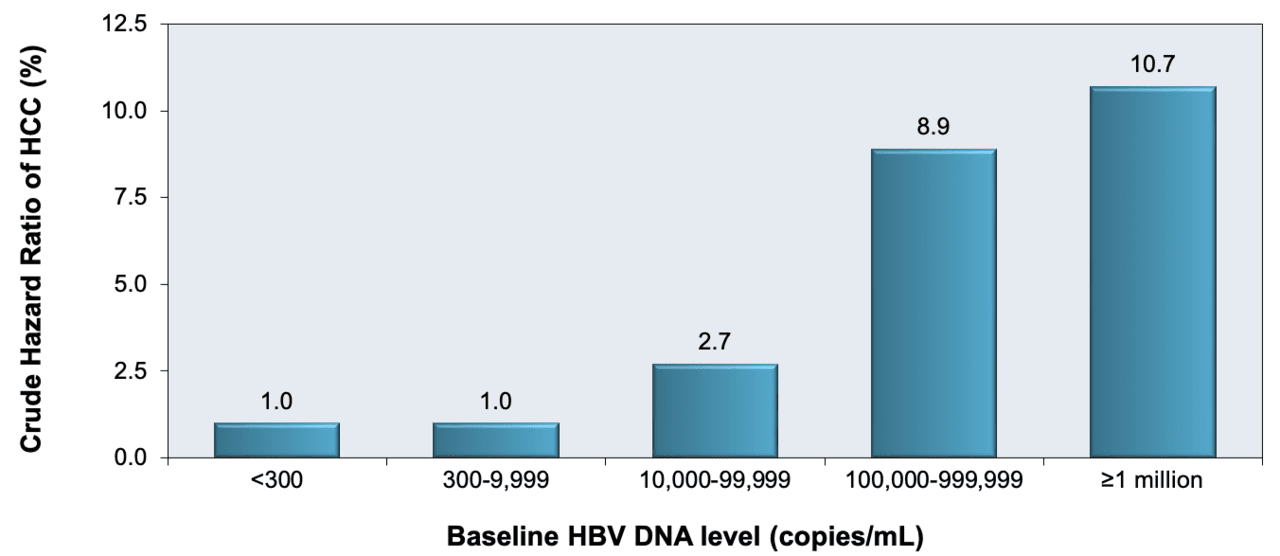
Because there can be a lack of correlation between ALT and disease activity when examined on its own, ALT must be considered in conjunction with the serum HBV DNA level.[32,33] The HBV DNA levels have been associated with the risk of developing hepatocellular carcinoma and cirrhosis (Figure 1).[34,35]
- In the large prospective REVEAL cohort study, investigators enrolled 3,653 persons 30 to 65 years of age in Taiwan, and followed them for a mean of 11.4 years. When compared with those with HBV DNA levels less than 10,000 copies/mL (approximately 2,000 IU/mL), the risk of liver cancer was shown to range from 2.7-fold higher in those with a serum HBV DNA level of 10,000 to 99,999 copies/mL (approximately 2,000 to 20,000 IU/mL) to 10.7-fold higher in those with a HBV DNA level greater than or equal to 1 million copies/mL (greater than or equal to approximately 200,000 IU/mL).[34] This landmark study provided the early proof of concept for serum HBV DNA levels as a major driver of disease pathogenesis and the possibility of HBV suppression as a key intervention in mitigating disease progression.[34]
- In a separate but similar study, persons with chronic HBV were also found, in a dose-dependent gradient, to have an increased risk of cirrhosis with increasing serum HBV DNA levels, with a notable 6.5-fold higher risk in those with HBV DNA levels greater than 1 million copies/mL (approximately 200,000 IU/mL) compared to those with an HBV DNA level less than 300 copies/mL (less than approximately 60 IU/mL).[35]
Alanine Aminotransferase (ALT) Levels
Serum ALT levels provide a rapid and noninvasive measure that can indicate hepatic inflammation. The 2025 AASLD/IDSA HBV Treatment Guideline recommended using an upper limit of normal (ULN) for ALT (less than 25 U/L for women and less than 35 U/L for men) for HBV treatment decisions.[18] These ULN cutoffs are lower than the ULN defined by many commercial laboratories, which derive their range from the general population and more specifically from blood donors without evidence of HBV or hepatitis C virus (HCV) infection. Due to the high prevalence of steatotic liver disease among "healthy" donors, the ULN from these donor pools may be higher and therefore not optimized to detect individuals with underlying liver disease caused by viral hepatitis.[36] Ideally, a treatment decision should not be made on the basis of a single serum ALT value. These values often vary, and the phase of HBV infection generally needs to be confirmed with multiple assessments of serum ALT over time, typically every 3 to 6 months, given the dynamic nature of HBV infection.
Immune Phases of Chronic HBV Infection
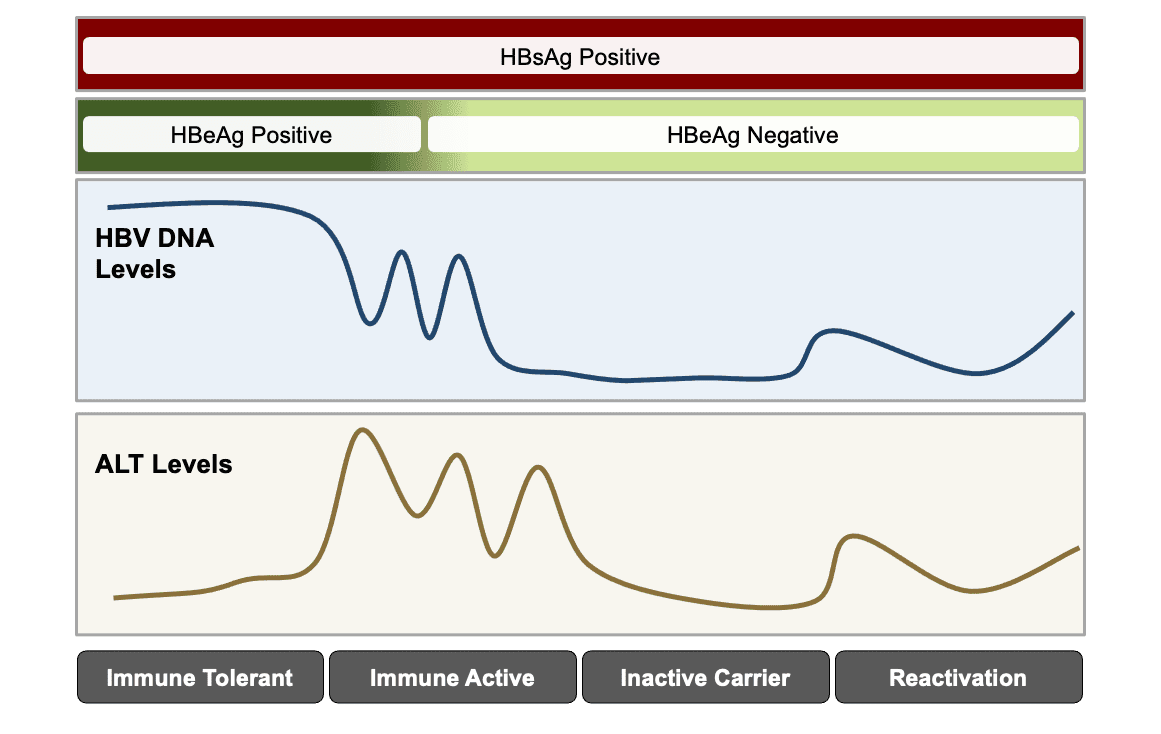
From a conceptual standpoint, chronic HBV infection has been characterized by four phases (or types of immune responses): immune tolerant, immune active, inactive carrier, and indeterminate.[18,37,38,39] The liver damage that can occur with chronic HBV infection is primarily related to the host immune response to hepatocytes infected with HBV. The inflammation and liver cell death associated with this immune response are thought to occur predominantly in the immune-active phase of chronic HBV. The phases of chronic HBV infection are not considered static; individuals can undergo transitions in and out of these different stages throughout their lifetime (Figure 2).[3,38]
Immune-Tolerant Chronic HBV
The 2025 AASLD/IDSA HBV Treatment Guideline characterizes the immune-tolerant phase as one with a positive HBeAg, very high HBV DNA levels (typically greater than 10 million IU/mL), normal ALT and/or AST levels, and a liver biopsy (if done) showing no fibrosis and minimal inflammation.[18] Despite having very high HBV DNA levels, there is little immune reaction to the HBV-infected hepatocytes and minimal liver inflammation. Although antiviral therapy was historically not recommended for persons in the immune-tolerant phase, the 2025 AASLD/IDSA HBV Treatment Guideline now recommends antiviral therapy for individuals in the immune-tolerant phase who (1) are older than 40 years of age and (2) have significant liver inflammation (grade 2 or higher) or fibrosis (F2 or higher) based on non-invasive testing or liver biopsy histologic findings, which might suggest more active disease.[18] For individuals in the immune-tolerant phase who do not meet these criteria, treatment can be started earlier based on shared decision-making.[18] Much of this shift in recommendations comes from studies that show a correlation between HBV DNA levels and HCC risk, as well as studies demonstrating that up to one-third of persons with chronic HBV who are older than 40 years of age with normal ALT can have significant inflammation (grade 2 or higher) and/or fibrosis (stage 2 or higher).[40] In these patients, normal ALT can be a less reliable predictor of quiescent or minimal disease.[40] Individuals in the immune-tolerant phase who are not on active antiretroviral therapy should have their ALT monitored every 6 months to assess for transition to immune-active infection.[18]
Immune-Active Chronic HBV or Reactivation of Chronic HBV
The 2025 AASLD/IDSA HBV Treatment Guideline defines immune-active chronic HBV as persistent elevation of ALT at least 2 times greater than the upper limit of normal (or evidence of significant histologic disease) plus elevated HBV DNA above 2,000 IU/mL if HBeAg negative or above 20,000 IU/mL if HBeAg positive.[18] If this occurs in persons who are HBeAg-negative after a period in the inactive carrier phase, this has also been referred to as reactivation. For persons who do not have cirrhosis or any special condition that warrants HBV treatment, the main indication for therapy would be evidence of immune activity, as reflected by persistent (at least 3 to 6 months) elevations in both ALT and plasma HBV DNA levels. The evidence to support the benefit of antiviral treatment in reducing the risk of clinical events (cirrhosis and HCC-related mortality) is found primarily in patients who have met criteria for immune-active disease.[20] These include observational studies as well as randomized controlled trials (RCTs) that compared a control group (no treatment or placebo) with either interferon-based therapy or an oral nucleoside or nucleotide analogue agent. Seven RCTs involving 3,463 patients followed for a mean of 28 months demonstrated that antiviral therapy significantly reduced the risk of decompensated liver disease and cirrhosis.[20] Further, in 35 observational studies of 59,201 patients followed for a mean of 60 months, antiviral therapy versus control was associated with a decreased risk of HCC, cirrhosis, and all-cause mortality in this population.[20]
Inactive Chronic Hepatitis B
The AASLD characterizes inactive chronic HBV as HBeAg-negative (and anti-HBe-positive), status with serum HBV DNA levels less than 2,000 IU/mL, persistently normal ALT and/or AST levels, a liver biopsy that confirms the absence of significant necroinflammation, and variable levels of fibrosis observed on liver biopsy or noninvasive testing.[3] Antiviral therapy is not typically recommended in these individuals, but they require ongoing monitoring for immune-active transition. In addition, these individuals can go on to HBV reactivation, either spontaneously or with immunosuppression. It is important to note that even inactive carriers with low HBV viral levels remain at risk for HCC.[41,42] Therefore, guidelines recommend these patients also undergo HCC screening when indicated.
Indeterminate or Gray-Zone Phase
Approximately 40–50% of persons with chronic hepatitis B fall into an indeterminate (or “gray zone”) phase of infection, meaning they do not fall into one of the defined HBV phases (immune tolerant, immune active, or immune inactive).[43] The most prevalent indeterminate profile is among those who are HBeAg-negative with normal ALT but elevated HBV DNA level greater than 2000 IU/mL.[43] More than 40% of these individuals may have significant hepatic inflammation or fibrosis on biopsy, even with normal ALT levels.[44,45] Studies have also shown that this group is at risk of adverse outcomes. Their 10-year cumulative risk of immune activity (ALT elevation) or HCC is not insubstantial and notably higher than in those with inactive disease.[46,47,48] Meta-analyses and cohort studies suggest that antiviral therapy can lower the risk of HCC and cirrhosis in patients in the indeterminate phase, particularly among subgroups at high risk.[48,49] The 2025 AASLD/IDSA HBV Treatment Guideline recommends antiviral therapy using a shared decision-making approach in individuals with chronic HBV in the indeterminate phase, taking into account risks and benefits of therapy, as well as patient specific factors (e.g., fibrosis stage, age, and sex).[18]
Hepatitis B Treatment Guidance Recommendations
Several leading professional organizations have provided guidance on when to initiate treatment for persons with chronic HBV.[3,16,17] The following summary is intended to provide a succinct description of their recommended indications for initiating HBV treatment. The reader is encouraged to access these original documents for additional details, discussion, and information about the level of evidence and strength of recommendations.
| Risk Group | AASLD/IDSA 2025 |
APASL 2015 |
EASL 2025 |
WHO 2024 |
|
Without cirrhosis |
Treat if:
- Immune-tolerant if they are: >40 years of age or have significant liver inflammation (≥grade 2) or fibrosis (≥F2) on liver biopsy or non-invasive testing. |
Treat if: |
Treat if:
|
Treat if any: |
|
Compensated cirrhosis |
Treat all4 |
Treat if: |
Treat if: |
Treat all4 |
|
Decompensated cirrhosis |
Treat all4 and refer for liver transplantation | Treat all4 | Treat all4 |
Treat all4 |
|
Abbreviations: AASLD = American Association for the Study of Liver Diseases; APASL = Asian Pacific Association for the Study of the Liver; EASL= European Association for the Study of the Liver; WHO = World Health Organization; ALT = alanine aminotransferase; ULN = upper limit of normal |
||||
- European Association for the Study of the Liver. EASL Clinical Practice Guidelines on the management of hepatitis B virus infection. J Hepatol. 2025:S0168-8278(25)00174-6. [PubMed Abstract]
- Ghany MG, Pan CQ, Lok AS, et al. AASLD/IDSA Practice Guideline on treatment of chronic hepatitis B. Hepatology. 2025 Nov 4. Online ahead of print. [PubMed Abstract]
- Sarin SK, Kumar M, Lau GK, et al. Asian-Pacific clinical practice guidelines on the management of hepatitis B: a 2015 update. Hepatol Int. 2016;10:1-98. [PubMed Abstract]
- Terrault NA, Lok ASF, McMahon BJ, et al. Update on prevention, diagnosis, and treatment of chronic hepatitis B: AASLD 2018 hepatitis B guidance. Hepatology. 2018;67:1560-99. [PubMed Abstract]
- World Health Organization. Guidelines for the prevention, diagnosis, care and treatment for people with chronic hepatitis B infection. March 29, 2024. [WHO]
American Association for the Study of Liver Diseases
The American Association for the Study of Liver Disease (AASLD) hepatitis B guidance has served as the main HBV treatment guidance in the United States.[3,50] The most recommendations were developed by the AASLD in collaboration with the Infectious Diseases Society of America (IDSA).[18] The updated 2025 AASLD/IDSA HBV Treatment Guideline recommends initiating HBV treatment in the following situations in persons with chronic HBV.[18]
- Immune-Active Disease: Treatment is recommended for persons with immune-active disease. For treatment purposes, immune-active disease is defined as (1) elevation of ALT (at least 2 times the upper limit of normal) or evidence of significant histologic disease and (2) elevated HBV DNA above 2,000 IU/mL if HBeAg negative or above 20,000 IU/mL if HBeAg positive. The AASLD recommends using an ALT upper limit of normal of 35 U/L for males and 25 U/L for females to guide management decisions. Notably, neither the 2018 nor the 2025 guidance discusses the duration of ALT elevation to be counted as a persistent (rather than isolated) finding, but prior 2009 guidelines discuss using a period of 3 to 6 months. Significant histologic disease is defined as at least moderate necroinflammation and/or fibrosis.
- Compensated Cirrhosis: Treatment is recommended for all persons with cirrhosis, regardless of HBV DNA level, HBeAg status, or ALT levels.
- Decompensated Cirrhosis: Initiation of oral antiviral treatment is recommended in conjunction with referral for consideration of liver transplantation.
- Select Patients in the Immune-Tolerant Phase: Antiviral therapy is recommended for patients in the immune-tolerant phase who are older than 40 years of age or have significant liver inflammation (grade 2 or higher) or fibrosis (F2 or higher) on liver biopsy or non-invasive testing. Younger patients in the immune-tolerant phase can consider initiating antiviral therapy based on shared decision-making with their provider.
- HBeAg-Negative Individuals in the Indeterminant Phase: Treatment is recommended, using a shared-decision making approach. Individuals who are older (>40 years), male sex, have low normal platelets (<180 k/mm3), and/or ;advanced fibrosis (FIB-4 >1.45 or elastography ≥8 kPa) may be most likely to benefit.
- Individuals in High-Risk Scenarios for Transmission: For patients who are in high-risk scenarios for HBV transmission (e.g., multiple sex partners, injection drug use, health care workers engaged in exposure-prone procedures) but otherwise do not meet criteria for antiviral treatment, initiation of antiviral therapy can be considered based on shared decision-making.
Asian Pacific Association for the Study of the Liver
The Asian Pacific Association for the Study of the Liver (APASL) hepatitis B guidance was generated by a panel of experts in this region, predominantly from the specialties of hepatology and gastroenterology. The most recent APASL Hepatitis B Guidance was published in 2015.[17] The 2015 APASL Hepatitis B Guidelines recommend initiating HBV treatment in the following situations for persons with chronic HBV.[17]
- Without Cirrhosis: Treatment may be started in noncirrhotic patients who have (1) persistent elevation of ALT (greater than 2 times the upper limit of normal at least 1 month between tests) and (2) elevated HBV DNA above 2,000 IU/mL if HBeAg negative or above 20,000 IU/mL if HBeAg positive. The ALT upper limit of normal used to guide management decisions is 40 U/L for both males and females. In addition, patients who have evidence of at least moderate inflammation and/or significant fibrosis on biopsy should also be considered for therapy regardless of ALT or HBV DNA level. Moderate inflammation is defined as either an Ishak activity score greater than 3 (out of a possible 18 total) or a METAVIR activity score of A2 or A3; significant fibrosis means F2 or greater by METAVIR fibrosis score or Ishak fibrosis stage of 3 or greater.
- Compensated Cirrhosis: Treatment is recommended with (1) HBV DNA level greater than 2,000 IU/mL regardless of ALT level or HBeAg status, or (2) any detectable HBV DNA level if ALT is elevated, regardless of HBeAg status.
- Decompensated Cirrhosis: Treatment is recommended with any detectable HBV DNA level, regardless of ALT levels or HBeAg status.
European Association for the Study of the Liver
The European Association for the Study of the Liver (EASL) hepatitis B clinical practice guidelines are the major hepatitis B guidance for Europe and this document was primarily written by gastroenterology and hepatology specialists.[51] The EASL Hepatitis B Clinical Practice Guidelines state that, in principle, all individuals with HBsAg-positive status and detectable HBV DNA levels are candidates for antiviral therapy.[51] The indication for treatment is primarily based on HBV DNA and ALT levels, fibrosis stage, and risk of liver disease progression and HCC.[51] The following summarizes the EASL guidelines simplified treatment algorithm for persons with chronic HBV infection (HBsAg-positive), independent of HBeAg status.[51] More detailed and expert guidance on indications for hepatitis B treatment, including treatment decisions based on HBeAg status is provided in these guidelines, but will not be addressed here.[51]
With Cirrhosis or Advanced Fibrosis (equivalent of ISHAK ≥F4/Metavir ≥F3 [non-invasive assessment is preferred, liver stiffness measurement>8 kPa])
- Anti-HBV treatment is indicated if the HBV DNA is positive (HBV DNA measurement should be with a sensitive nucleic acid test (NAT) with a lower limit of detection <20 U/L).
- Monitoring, not treatment, is indicated if the HBV DNA is negative. Anti-HBV treatment should be considered in immunosuppressed individuals.
Without Advanced Fibrosis or Cirrhosis
- Anti-HBV treatment is indicated if the HBV DNA is ≥2,000 IU/mL and any of the following are present:
- ALT >ULN, or
- Fibrosis (equivalent of ISHAK ≥F3/Metavir ≥F2 [non-invasive assessment is preferred, liver stiffness measurement ;>7 kPa]) or
- Risk factors for HCC, or
- Extrahepatic manifestations, or
- Immunosuppression,or
- Risk for HBV transmission (threshold values for HBV DNA vary depending on the activity and risk of transmission. Tenofovir indicated in pregnant women with HBV DNA ≥200,000 IU/mL to prevent mother-to-child transmission.
- Monitoring is recommended for persons without cirrhosis or advanced fibrosis and HBV DNA ≥2,000 IU/mL, but do not meet any of the above additional criteria.
- Monitoring is recommended for persons who have an HBV DNA level less than 2,000 IU/mL, except if the ALT is greater than the ULN and other liver diseases have been excluded as the cause of the elevated ALT level.
- For persons who do not meet criteria based on HBV DNA level and additional factors listed above, anti-HBV treatment is indicated if any of the following are present or develop while monitoring:
- HCC
- HIV coinfection
- Extrahepatic manifestations
- Immunosuppression
World Health Organization
In 2024, the World Health Organization (WHO) issued an update to its comprehensive guidance on HBV prevention, care and treatment. This update included expanded treatment eligibility for all adults, as well as for adolescents aged 12 or older. Among the four main criteria for treatment outlined below, only one requires access to HBV DNA quantitation, which has been a major barrier to accessing treatment in more resource-limited settings.- Without Cirrhosis: Treat adults or adolescents ≥12 years if:
- Significant fibrosis, as defined by:
- APRI >0.5 or transient elastography >7.0 kPa, or
- HBV DNA level >2000 IU/mL and ALT ≥30 U/L for males, ≥19 U/L for females
- Presence of any of the following:
- Coinfection (HDV, HIV, HCV), or
- Family history of liver cancer or cirrhosis, or
- Immune suppression, or
- Comorbidities (e.g., diabetes, metabolic-associated steatotic liver disease [MASLD]), or
- Extrahepatic manifestations (e.g., glomerulonephritis, vasculitis)
- Significant fibrosis, as defined by:
- Persistently Abnormal ALT Levels: Treatment is recommended for persistently abnormal ALT levels (defined as two ALT values of ≥19 for women or ≥30 I/U for men at unspecified intervals during a 6- to 12-month period).
- Cirrhosis: Treatment is recommended for all such individuals, regardless of HBV viral level.
- Decompensated Cirrhosis: Treatment is recommended for all such individuals, regardless of HBV viral level.
HBV Primary Care Workgroup
The HBV Primary Care Workgroup includes members from primary care, hepatology, infectious diseases, pharmacy, and community and public health.[52] The Hepatitis B Management: Guidance for the Primary Provider was first released in early 2020 and was recently updated in 2025.[52,53] The guidance is accessible on this website (Hepatitis B Online).[52] The goal of this document is to provide simplified, up-to-date, and readily accessible HBV management guidance for health care professionals.[52] This guidance states that, in principle, all individuals who are HBsAg-positive with viremia are candidates for treatment. Factors to consider are fibrosis stage, HBV DNA level, ALT level, risk of disease progression, HCC, and patient preference. The following summarizes the HBV Primary Care Workgroup 2025 Guidance on hepatitis B management for clinicians.[52]
- Significant fibrosis or cirrhosis (≥F2; elastography >7 kPa or APRI >0.5) and detectable HBV DNA
or
- HBV DNA >2000 IU/mL and one of the following:
-
Elevated ALT (male >35 U/L; female >25 U/L)
-
Family history of HCC
or
- Any of the following conditions:
-
Immunosuppression
-
Viral coinfections (e.g. HIV, HDV, HCV treatment)
-
HBV transmission risk factors (e.g. pregnant with HBV DNA > 200,000 IU/mL)
-
Extrahepatic manifestations of HBV (e.g., glomerulonephritis, polyarteritis nodosa)
or
- Patient preference for treatment over monitoring-only
Special Indications for Initiating Treatment
There are a variety of special clinical situations in patients with HBV where antiviral therapy may be warranted regardless of cirrhosis status, hepatic aminotransferase levels, or HBV DNA levels.[3] The most common of these specific circumstances are listed below.
- Pregnant Women with an HBV DNA Level Greater than 200,000 IU/mL: Treatment of HBV, beginning at 28 weeks’ gestation, is indicated for all pregnant women who have an HBV DNA level greater than 200,000 IU/mL at any time in the pregnancy.[9,18] The purpose of HBV treatment of a pregnant woman with a high HBV DNA level is to further reduce the risk of perinatal transmission beyond what is accomplished by passive and active HBV immunization given to the newborn.[54]
- Persons with HIV and HBV Coinfection: Fully suppressive antiretroviral therapy to treat HIV is recommended for all persons with HIV.[55] In addition, all persons with HIV and chronic HBV should receive concomitant treatment for HBV, regardless of the cirrhosis status, hepatic aminotransferase levels, or HBV DNA levels.[56] The goal of treating HBV in persons with HIV coinfection is to reduce the excess risk of liver-related morbidity and mortality that persons with HIV and HBV coinfection have (when compared to persons who have HBV monoinfection or HIV monoinfection).[57,58] Antiviral treatment should ensure concomitant fully active treatment for HIV and HBV, with a regimen that ideally includes three medications with activity against HIV and two medications with activity against HBV (typically tenofovir DF or tenofovir alafenamide with either emtricitabine or lamivudine).[56]
- Persons at Risk for HBV Reactivation: Individuals with untreated chronic HBV or past infection with HBV are at risk of HBV reactivation if they receive immunosuppressive, cytotoxic, or biologic disease-modifying antirheumatic drugs.[13,14,59] In this context, HBV reactivation is defined as either an increase in HBV DNA levels over baseline or seroreversion (from HBsAg negative to HBsAg positive). This reactivation results from loss of immune control of HBV, with potential high-level viral replication and resultant inflammatory activity or flare.[13,14] Reactivation of HBV can also occur in persons receiving HCV therapy with direct-acting antiviral agents (DAAs).[60,61] In any setting of increased risk of HBV reactivation, the primary goal of administering HBV antiviral therapy prior to immunosuppressive or HCV therapy is to reduce the risk of HBV reactivation and associated liver injury, which has the potential to be severe in this setting.[13,14] For more details on this topic, see the Lesson on HBV Reactivation in the Setting of Immunosuppression.
- Persons with Chronic HBV Receiving HIV Preexposure Prophylaxis: In the United States, there are two FDA-approved oral regimens for HIV preexposure prophylaxis (PrEP): tenofovir DF-emtricitabine (TDF-FTC) and tenofovir alafenamide-emtricitabine (TAF-FTC); both of these medications also have activity against HBV.[62] The use of HIV PrEP may be indicated in a person who also has chronic HBV infection. Since both of the oral medication combinations used for HIV PrEP are highly active against HBV, any person with chronic HBV who is receiving oral HIV PrEP is also receiving treatment for HBV. It is important to understand that intermittent use of oral HIV PrEP can create unintended negative consequences related to the HBV infection, such as generating HBV drug resistance or developing HBV-related hepatic flares. Thus, persons with chronic hepatitis B who are taking oral HIV PrEP should be counseled about the risks of intermittent use of oral HIV PrEP and discontinuation of oral HIV PrEP. If HIV PrEP is stopped and no additional treatment, such as entecavir, is used, then clinical and laboratory monitoring is needed after the HIV PrEP is stopped. In contrast to the oral PrEP options, the long-acting injectable medications approved for HIV PrEP—long-acting injectable cabotegravir (CAB-LA) and lenacapavir subcutaneous injection (LEN-SQ)—are not active against HBV.
Summary Points
- The goals of HBV treatment are to prevent the development of cirrhosis, hepatocellular carcinoma, and liver-related death.
- Antiviral therapy is not considered curative but can improve serologic, virologic, and histologic endpoints. It has also been shown to reduce the risk of liver-related outcomes such as cirrhosis and HCC in selected patients.
- Multiple organizations, including AASLD, EASL, APASL, and the WHO, have issued guidance that outlines treatment indications for persons with chronic HBV.
- According to these groups, antiviral therapy is indicated in all patients with chronic HBV and cirrhosis, regardless of ALT level.
- According to most guidelines, antiviral therapy is indicated in patients with chronic HBV without cirrhosis who meet the criteria for persistent immune-active disease, as defined by elevated HBV DNA level (greater than 2,000 IU/ML) and persistent elevated ALT levels.
- For the purpose of making treatment decisions in persons with chronic HBV infection, the AASLD guidance recommends using an upper range of normal ALT of 25 IU/L in women and 35 IU/L in men; the WHO ALT thresholds are 19 IU/L for women and 39 IU/L for men.
- Antiviral therapy for chronic HBV is indicated in patients who have evidence of at least moderate liver necroinflammation or fibrosis, determined traditionally by biopsy but now more often by noninvasive measures such as AST-platelet ratio index (APRI) or vibration-controlled transient elastography (VCTE).
- Antiviral therapy for chronic HBV may be indicated regardless of the phase of disease in those patients who have a variety of special conditions that include pregnancy, immune suppression, and HIV coinfection.
- Other clinical factors such as age, family history of HCC, risk of onward transmission, and comorbidities (i.e., extrahepatic manifestations) should be considered in the decision to treat or perform a biopsy on an individual with chronic HBV.
Citations
- 1.Likhitsup A, Lok AS. Understanding the Natural History of Hepatitis B Virus Infection and the New Definitions of Cure and the Endpoints of Clinical Trials. Clin Liver Dis. 2019;23:401-16.[PubMed Abstract] -
- 2.Chang ML, Liaw YF. Hepatitis B flares in chronic hepatitis B: pathogenesis, natural course, and management. J Hepatol. 2014;61:1407-17.[PubMed Abstract] -
- 3.Terrault NA, Lok ASF, McMahon BJ, et al. Update on prevention, diagnosis, and treatment of chronic hepatitis B: AASLD 2018 hepatitis B guidance. Hepatology. 2018;67:1560-99.[PubMed Abstract] -
- 4.Dienstag JL. Hepatitis B virus infection. N Engl J Med. 2008;359:1486-500.[PubMed Abstract] -
- 5.Chang TT, Liaw YF, Wu SS, et al. Long-term entecavir therapy results in the reversal of fibrosis/cirrhosis and continued histological improvement in patients with chronic hepatitis B. Hepatology. 2010;52:886-93.[PubMed Abstract] -
- 6.Hosaka T, Suzuki F, Kobayashi M, et al. Long-term entecavir treatment reduces hepatocellular carcinoma incidence in patients with hepatitis B virus infection. Hepatology. 2013;58:98-107.[PubMed Abstract] -
- 7.Choi J, Kim HJ, Lee J, Cho S, Ko MJ, Lim YS. Risk of Hepatocellular Carcinoma in Patients Treated With Entecavir vs Tenofovir for Chronic Hepatitis B: A Korean Nationwide Cohort Study. JAMA Oncol. 2019;5:30-6.[PubMed Abstract] -
- 8.Ahn J, Lim JK, Lee HM, et al. Lower Observed Hepatocellular Carcinoma Incidence in Chronic Hepatitis B Patients Treated With Entecavir: Results of the ENUMERATE Study. Am J Gastroenterol. 2016;111:1297-304.[PubMed Abstract] -
- 9.Schillie S, Vellozzi C, Reingold A, et al. Prevention of Hepatitis B Virus Infection in the United States: Recommendations of the Advisory Committee on Immunization Practices. MMWR Recomm Rep. 2018;67:1-31.[PubMed Abstract] -
- 10.Dusheiko G, Agarwal K, Maini MK. New Approaches to Chronic Hepatitis B. N Engl J Med. 2023;388:55-69.[PubMed Abstract] -
- 11.Tu T, Budzinska MA, Shackel NA, Urban S. HBV DNA Integration: Molecular Mechanisms and Clinical Implications. Viruses. 2017;9.pii: E75.[PubMed Abstract] -
- 12.Querido S, Weigert A, Adragão T, et al. Risk of hepatitis B reactivation in hepatitis B surface antigen seronegative and core antibody seropositive kidney transplant recipients. Transpl Infect Dis. 2019;21:e13009.[PubMed Abstract] -
- 13.Sasadeusz J, Grigg A, Hughes PD, et al. Screening and Prophylaxis to Prevent Hepatitis B Reactivation: Other Populations and Newer Agents. Clin Liver Dis. 2019;23:521-34.[PubMed Abstract] -
- 14.Sasadeusz J, Grigg A, Hughes PD, et al. Screening and Prophylaxis to Prevent Hepatitis B Reactivation: Patients with Hematological and Solid Tumor Malignancies. Clin Liver Dis. 2019;23:511-9.[PubMed Abstract] -
- 15.World Health Organization. Guidelines for the prevention, diagnosis, care and treatment for people with chronic hepatitis B infection. March 29, 2024.[WHO] -
- 16.European Association For The Study Of The Liver. EASL 2017 Clinical Practice Guidelines on the management of hepatitis B virus infection. J Hepatol. 2017;67:370-98.[PubMed Abstract] -
- 17.Sarin SK, Kumar M, Lau GK, et al. Asian-Pacific clinical practice guidelines on the management of hepatitis B: a 2015 update. Hepatol Int. 2016;10:1-98.[PubMed Abstract] -
- 18.Ghany MG, Pan CQ, Lok AS, et al. AASLD/IDSA Practice Guideline on treatment of chronic hepatitis B. Hepatology. 2025 Nov 4. Online ahead of print.[PubMed Abstract] -
- 19.Raffetti E, Fattovich G, Donato F. Incidence of hepatocellular carcinoma in untreated subjects with chronic hepatitis B: a systematic review and meta-analysis. Liver Int. 2016;36:1239-51.[PubMed Abstract] -
- 20.Lok AS, McMahon BJ, Brown RS Jr, et al. Antiviral therapy for chronic hepatitis B viral infection in adults: A systematic review and meta-analysis. Hepatology. 2016;63:284-306.[PubMed Abstract] -
- 21.Kim BK, Kim DY, Park JY, et al. Validation of FIB-4 and comparison with other simple noninvasive indices for predicting liver fibrosis and cirrhosis in hepatitis B virus-infected patients. Liver Int. 2010;30:546-53.[PubMed Abstract] -
- 22.Li J, Gordon SC, Rupp LB, et al. The validity of serum markers for fibrosis staging in chronic hepatitis B and C. J Viral Hepat. 2014;21:930-7.[PubMed Abstract] -
- 23.Sterling RK, Duarte-Rojo A, Patel K, et al. AASLD Practice Guideline on imaging-based noninvasive liver disease assessment of hepatic fibrosis and steatosis. Hepatology. 2025;81:672-724.[PubMed Abstract] -
- 24.Xiao G, Yang J, Yan L. Comparison of diagnostic accuracy of aspartate aminotransferase to platelet ratio index and fibrosis-4 index for detecting liver fibrosis in adult patients with chronic hepatitis B virus infection: a systemic review and meta-analysis. Hepatology. 2015;61:292-302.[PubMed Abstract] -
- 25.Li Y, Huang YS, Wang ZZ, et al. Systematic review with meta-analysis: the diagnostic accuracy of transient elastography for the staging of liver fibrosis in patients with chronic hepatitis B. Aliment Pharmacol Ther. 2016;43:458-69.[PubMed Abstract] -
- 26.Nana J, Skaare K, Bosson JL, et al. EASL-ALEH 2015 algorithm for the use of transient elastography in treatment-naive patients with hepatitis B: An independent validation. J Viral Hepat. 2021;28:1169-76.[PubMed Abstract] -
- 27.Schambeck JPL, Forte GC, Gonçalves LM, et al. Diagnostic accuracy of magnetic resonance elastography and point-shear wave elastography for significant hepatic fibrosis screening: Systematic review and meta-analysis. PLoS One. 2023;18:e0271572.[PubMed Abstract] -
- 28.Xiao H, Shi M, Xie Y, Chi X. Comparison of diagnostic accuracy of magnetic resonance elastography and Fibroscan for detecting liver fibrosis in chronic hepatitis B patients: A systematic review and meta-analysis. PLoS One. 2017;12:e0186660.[PubMed Abstract] -
- 29.Choong CC, Venkatesh SK, Siew EP. Accuracy of routine clinical ultrasound for staging of liver fibrosis. J Clin Imaging Sci. 2012;2:58.[PubMed Abstract] -
- 30.Lurie Y, Webb M, Cytter-Kuint R, Shteingart S, Lederkremer GZ. Non-invasive diagnosis of liver fibrosis and cirrhosis. World J Gastroenterol. 2015;21:11567-83.[PubMed Abstract] -
- 31.Ghany MG. Current treatment guidelines of chronic hepatitis B: The role of nucleos(t)ide analogues and peginterferon. Best Pract Res Clin Gastroenterol. 2017;31:299-309.[PubMed Abstract] -
- 32.Keeffe EB, Dieterich DT, Han SH, et al. A treatment algorithm for the management of chronic hepatitis B virus infection in the United States: 2008 update. Clin Gastroenterol Hepatol. 2008;6:1315-41.[PubMed Abstract] -
- 33.Lok AS, Heathcote EJ, Hoofnagle JH. Management of hepatitis B: 2000--summary of a workshop. Gastroenterology. 2001;120:1828-53.[PubMed Abstract] -
- 34.Chen CJ, Yang HI, Su J, et al. Risk of hepatocellular carcinoma across a biological gradient of serum hepatitis B virus DNA level. JAMA. 2006;295:65-73.[PubMed Abstract] -
- 35.Iloeje UH, Yang HI, Su J, Jen CL, You SL, Chen CJ. Predicting cirrhosis risk based on the level of circulating hepatitis B viral load. Gastroenterology. 2006;130:678-86.[PubMed Abstract] -
- 36.Kariv R, Leshno M, Beth-Or A, et al. Re-evaluation of serum alanine aminotransferase upper normal limit and its modulating factors in a large-scale population study. Liver Int. 2006;26:445-50.[PubMed Abstract] -
- 37.Hoofnagle JH, Doo E, Liang TJ, Fleischer R, Lok AS. Management of hepatitis B: summary of a clinical research workshop. Hepatology. 2007;45:1056-75.[PubMed Abstract] -
- 38.McMahon BJ. Natural history of chronic hepatitis B. Clin Liver Dis. 2010;14:381-96.[PubMed Abstract] -
- 39.Sorrell MF, Belongia EA, Costa J, et al. National Institutes of Health Consensus Development Conference Statement: management of hepatitis B. Ann Intern Med. 2009;150:104-10.[PubMed Abstract] -
- 40.Kim GA, Lim YS, Han S, et al. High risk of hepatocellular carcinoma and death in patients with immune-tolerant-phase chronic hepatitis B. Gut. 2018;67:945-52.[PubMed Abstract] -
- 41.Chen CJ, Yang HI. Natural history of chronic hepatitis B REVEALed. J Gastroenterol Hepatol. 2011;26:628-38.[PubMed Abstract] -
- 42.Chen JD, Yang HI, Iloeje UH, et al. Carriers of inactive hepatitis B virus are still at risk for hepatocellular carcinoma and liver-related death. Gastroenterology. 2010;138:1747-54.[PubMed Abstract] -
- 43.Huang R, Do AT, Toyoda H, et al. Distribution, Characteristics, and Natural History of Diverse Types of Indeterminate Chronic Hepatitis B: A REAL-B Study. Aliment Pharmacol Ther. 2025;62:349-58.[PubMed Abstract] -
- 44.Gan QY, Wang JX, Qian F, et al. Clinical and histological features of patients with chronic hepatitis B virus infection in the grey zone. J Viral Hepat. 2023;30:803-9.[PubMed Abstract] -
- 45.Jiang SW, Lian X, Hu AR, et al. Liver histopathological lesions is severe in patients with normal alanine transaminase and low to moderate hepatitis B virus DNA replication. World J Gastroenterol. 2023;29:2479-94.[PubMed Abstract] -
- 46.Huang DQ, Li X, Le MH, et al. Natural History and Hepatocellular Carcinoma Risk in Untreated Chronic Hepatitis B Patients With Indeterminate Phase. Clin Gastroenterol Hepatol. 2022;20:1803-1812.e5.[PubMed Abstract] -
- 47.Jiang H, Yu H, Huang Y, et al. Natural History and Prognosis of Chronic Hepatitis B Patients in the Indeterminate Phase. J Gastroenterol Hepatol. 2025;40:720-30.[PubMed Abstract] -
- 48.Lai JC, Wong GL, Tse YK, et al. Histological severity, clinical outcomes and impact of antiviral treatment in indeterminate phase of chronic hepatitis B: A systematic review and meta-analysis. J Hepatol. 2025;82:992-1003.[PubMed Abstract] -
- 49.Huang DQ, Tran A, Yeh ML, et al. Antiviral therapy substantially reduces HCC risk in patients with chronic hepatitis B infection in the indeterminate phase. Hepatology. 2023;78:1558-68.[PubMed Abstract] -
- 50.Terrault NA, Bzowej NH, Chang KM, Hwang JP, Jonas MM, Murad MH. AASLD guidelines for treatment of chronic hepatitis B. Hepatology. 2016;63:261-83.[PubMed Abstract] -
- 51.European Association for the Study of the Liver. EASL Clinical Practice Guidelines on the management of hepatitis B virus infection. J Hepatol. 2025:S0168-8278(25)00174-6.[PubMed Abstract] -
- 52.Tang AS, Wang S, Thornton K, and HBV Primary Care Workgroup. Hepatitis B Management: Guidance for the Primary Care Provider. December 2, 2025.
- 53.Tang AS, Thornton K, and HBV Primary Care Workgroup. Hepatitis B Management: Guidance for the Primary Care Provider. February 25, 2020.
- 54.Brown RS Jr, McMahon BJ, Lok AS, et al. Antiviral therapy in chronic hepatitis B viral infection during pregnancy: A systematic review and meta-analysis. Hepatology. 2016;63:319-33.[PubMed Abstract] -
- 55.Panel on Antiretroviral Guidelines for Adults and Adolescents. Guidelines for the use of antiretroviral agents in adults and adolescents with HIV. Department of Health and Human Services. Initiation of antiretroviral therapy. December 18, 2019.[HIV.gov] -
- 56.Panel on Opportunistic Infections in Adults and Adolescents with HIV. Guidelines for the prevention and treatment of opportunistic infections in adults and adolescents with HIV: recommendations from the Centers for Disease Control and Prevention, the National Institutes of Health, and the HIV Medicine Association of the Infectious Diseases Society of America. Hepatitis B virus infection. Last Updated: December 16, 2024.[HIV.gov] -
- 57.Falade-Nwulia O, Seaberg EC, Rinaldo CR, Badri S, Witt M, Thio CL. Comparative risk of liver-related mortality from chronic hepatitis B versus chronic hepatitis C virus infection. Clin Infect Dis. 2012;55:507-13.[PubMed Abstract] -
- 58.Thio CL, Seaberg EC, Skolasky R Jr, et al. HIV-1, hepatitis B virus, and risk of liver-related mortality in the Multicenter Cohort Study (MACS). Lancet. 2002;360:1921-6.[PubMed Abstract] -
- 59.Perrillo RP, Gish R, Falck-Ytter YT. American Gastroenterological Association Institute technical review on prevention and treatment of hepatitis B virus reactivation during immunosuppressive drug therapy. Gastroenterology. 2015;148:221-244.e3.[PubMed Abstract] -
- 60.Blackard JT, Sherman KE. Hepatitis B virus (HBV) reactivation-The potential role of direct-acting agents for hepatitis C virus (HCV). Rev Med Virol. 2018;28:e1984.[PubMed Abstract] -
- 61.Mücke MM, Backus LI, Mücke VT, et al. Hepatitis B virus reactivation during direct-acting antiviral therapy for hepatitis C: a systematic review and meta-analysis. Lancet Gastroenterol Hepatol. 2018;3:172-180.[PubMed Abstract] -
- 62.US Public Health Service. Preexposure prophylaxis for the prevention of HIV infection in the United States—2017 Update. March 2018:1-77.[CDC] -
Additional References
- Chen G, Lin W, Shen F, Iloeje UH, London WT, Evans AA. Past HBV viral load as predictor of mortality and morbidity from HCC and chronic liver disease in a prospective study. Am J Gastroenterol. 2006;101:1797-803.[PubMed Abstract] -
- Cohen C, Holmberg SD, McMahon BJ, et al. Is chronic hepatitis B being undertreated in the United States? J Viral Hepat. 2011;18:377-83.[PubMed Abstract] -
- Di Marco V, Lo Iacono O, Cammà C, et al. The long-term course of chronic hepatitis B. Hepatology. 1999;30:257-64.[PubMed Abstract] -
- Flemming JA, Terrault NA. Tenofovir vs Entecavir for hepatocellular carcinoma prevention in patients with chronic hepatitis B: one of these things Is not like the other. JAMA Oncol. 2019;5:17-18.[PubMed Abstract] -
- Ganem D, Prince AM. Hepatitis B virus infection--natural history and clinical consequences. N Engl J Med. 2004;350:1118-29.[PubMed Abstract] -
- Lai M, Hyatt BJ, Nasser I, Curry M, Afdhal NH. The clinical significance of persistently normal ALT in chronic hepatitis B infection. J Hepatol. 2007;47:760-7.[PubMed Abstract] -
- Lok AS, Zoulim F, Dusheiko G, Ghany MG. Hepatitis B cure: From discovery to regulatory approval. Hepatology. 2017;66:1296-1313.[PubMed Abstract] -
- Marcellin P, Gane E, Buti M, et al. Regression of cirrhosis during treatment with tenofovir disoproxil fumarate for chronic hepatitis B: a 5-year open-label follow-up study. Lancet. 2013;381:468-75.[PubMed Abstract] -
- Martin P, Lau DT, Nguyen MH, et al. A Treatment Algorithm for the Management of Chronic Hepatitis B Virus Infection in the United States: 2015 Update. Clin Gastroenterol Hepatol. 2015;13:2071-87.e16.[PubMed Abstract] -
- McMahon BJ. The natural history of chronic hepatitis B virus infection. Hepatology. 2009;49:S45-55.[PubMed Abstract] -
- Niederau C, Heintges T, Lange S, et al. Long-term follow-up of HBeAg-positive patients treated with interferon alfa for chronic hepatitis B. N Engl J Med. 1996;334:1422-7.[PubMed Abstract] -
- Seto WK, Lo YR, Pawlotsky JM, Yuen MF. Chronic hepatitis B virus infection. Lancet. 2018;392:2313-24.[PubMed Abstract] -
- Sinn DH, Kim SE, Kim BK, Kim JH, Choi MS. The risk of hepatocellular carcinoma among chronic hepatitis B virus-infected patients outside current treatment criteria. J Viral Hepat. 2019;26:1465-72.[PubMed Abstract] -
- Tseng TC, Kao JH. Treating Immune-tolerant Hepatitis B. J Viral Hepat. 2015;22:77-84.[PubMed Abstract] -
Figures



Tables
| Risk Group | AASLD/IDSA 2025 |
APASL 2015 |
EASL 2025 |
WHO 2024 |
|
Without cirrhosis |
Treat if:
- Immune-tolerant if they are: >40 years of age or have significant liver inflammation (≥grade 2) or fibrosis (≥F2) on liver biopsy or non-invasive testing. |
Treat if: |
Treat if:
|
Treat if any: |
|
Compensated cirrhosis |
Treat all4 |
Treat if: |
Treat if: |
Treat all4 |
|
Decompensated cirrhosis |
Treat all4 and refer for liver transplantation | Treat all4 | Treat all4 |
Treat all4 |
|
Abbreviations: AASLD = American Association for the Study of Liver Diseases; APASL = Asian Pacific Association for the Study of the Liver; EASL= European Association for the Study of the Liver; WHO = World Health Organization; ALT = alanine aminotransferase; ULN = upper limit of normal |
||||
- European Association for the Study of the Liver. EASL Clinical Practice Guidelines on the management of hepatitis B virus infection. J Hepatol. 2025:S0168-8278(25)00174-6. [PubMed Abstract]
- Ghany MG, Pan CQ, Lok AS, et al. AASLD/IDSA Practice Guideline on treatment of chronic hepatitis B. Hepatology. 2025 Nov 4. Online ahead of print. [PubMed Abstract]
- Sarin SK, Kumar M, Lau GK, et al. Asian-Pacific clinical practice guidelines on the management of hepatitis B: a 2015 update. Hepatol Int. 2016;10:1-98. [PubMed Abstract]
- Terrault NA, Lok ASF, McMahon BJ, et al. Update on prevention, diagnosis, and treatment of chronic hepatitis B: AASLD 2018 hepatitis B guidance. Hepatology. 2018;67:1560-99. [PubMed Abstract]
- World Health Organization. Guidelines for the prevention, diagnosis, care and treatment for people with chronic hepatitis B infection. March 29, 2024. [WHO]