
Lesson 11. Occupational HBV Postexposure Prophylaxis
Associate Editor
Associate Professor of Medicine
Division of Allergy & Infectious Diseases
University of Washington
Editor-in-Chief
Professor of Medicine
Division of Allergy & Infectious Diseases
University of Washington
Associate Editor
Professor of Medicine
Division of Allergy & Infectious Diseases
University of Washington
Learning Objective Performance Indicators
- Provide the rationale for routine hepatitis B vaccination for all health care personnel
- Identify the relative risks of acquiring hepatitis B virus (HBV) based on exposure type and type of body fluid
- Follow the recommended major steps in the initial evaluation of health care personnel potentially exposed to HBV
- Implement appropriate interventions for HBV postexposure prophylaxis
- Select the appropriate recommendation for HBV postexposure management based on health care personnel's hepatitis B vaccination status
Background
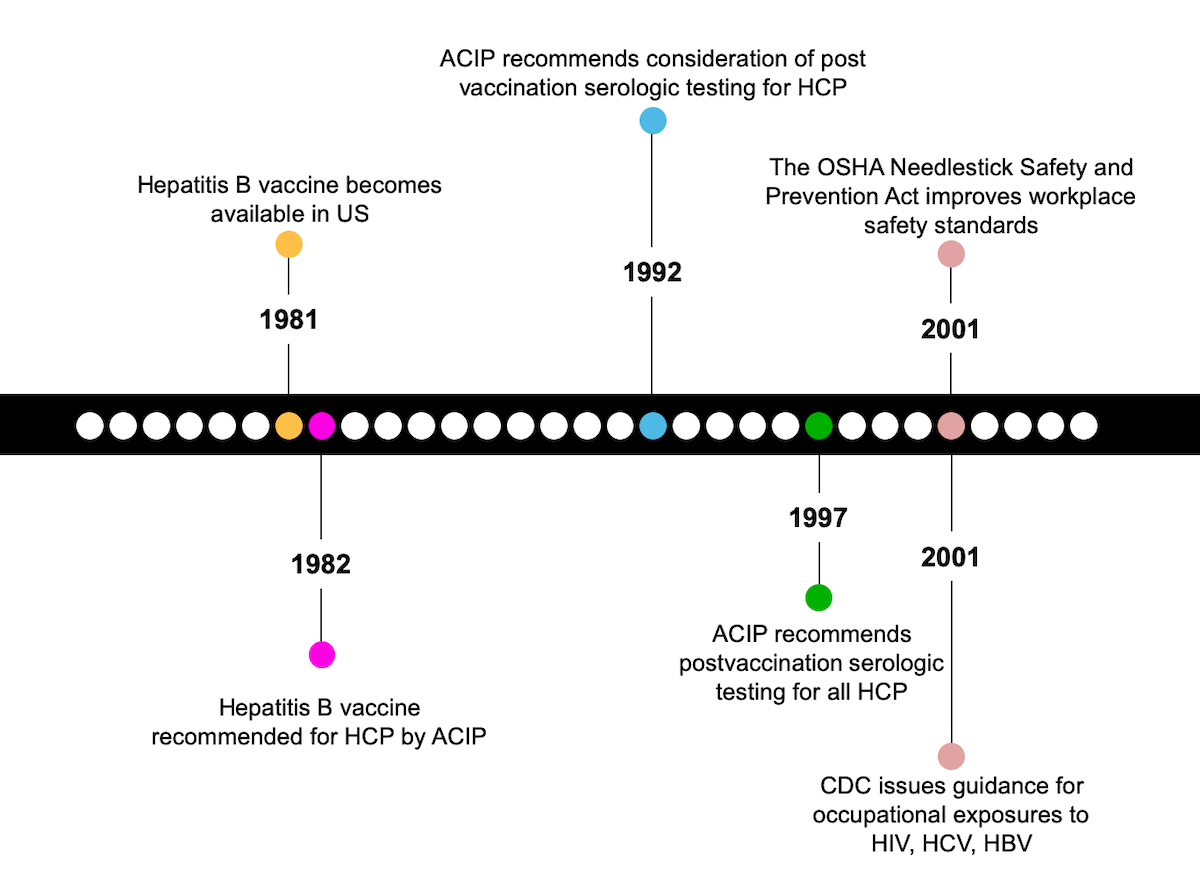
Health care personnel (HCP) are at risk for a variety of infectious pathogens following exposure to blood or body fluids, including hepatitis B virus (HBV), hepatitis C virus (HCV), and human immunodeficiency virus (HIV).[1,2] Hepatitis B is a highly infectious blood-borne pathogen that can remain viable on environmental surfaces for at least 7 days and can be transmitted even in the absence of visible blood.[3,4] For HCP, the potential to acquire HBV via occupational exposure is of particular concern, and preventing occupational HBV acquisition is a high priority in the United States health care system. Beginning in the early 1980s, several key developments, recommendations, and policy changes have resulted in a marked reduction in the risk of HCP acquiring HBV in the United States (Figure 1).[2,4,5]
Occupational HBV in the United States
During the 1970s, serologic studies conducted in the United States reported a seroprevalence of HBV among HCP that was approximately 10 times higher than in the general population.[6,7,8] Soon after the first vaccines to prevent HBV infection became available in 1981, the Advisory Committee on Immunization Practices (ACIP) recommended routine vaccination of HCP.[4] In 1983, there were approximately 17,000 HBV infections among HCP, which corresponded to a three-fold higher incidence than in the general population.[9,10] In 1991, given the ongoing risk for HBV infection among health care personnel who do not respond to the hepatitis B vaccine series, the ACIP recommended consideration of postvaccination serologic testing for HBV in health care personnel at risk for needlestick exposures, and in 1997 ultimately recommended universal HBV postvaccination serologic testing 1 to 2 months after completing the hepatitis B vaccine series for all HCP who have ongoing risk for occupational exposure.[4] These vaccine-related recommendations, paired with greater needle safety and improved use of standard precautions, led to a dramatic decline in the number of occupational HBV infections, with HBV infections among HCP falling by 98% between 1983 and 2010 (Figure 2).[2,4,5,10]
Sharps-Related Injuries
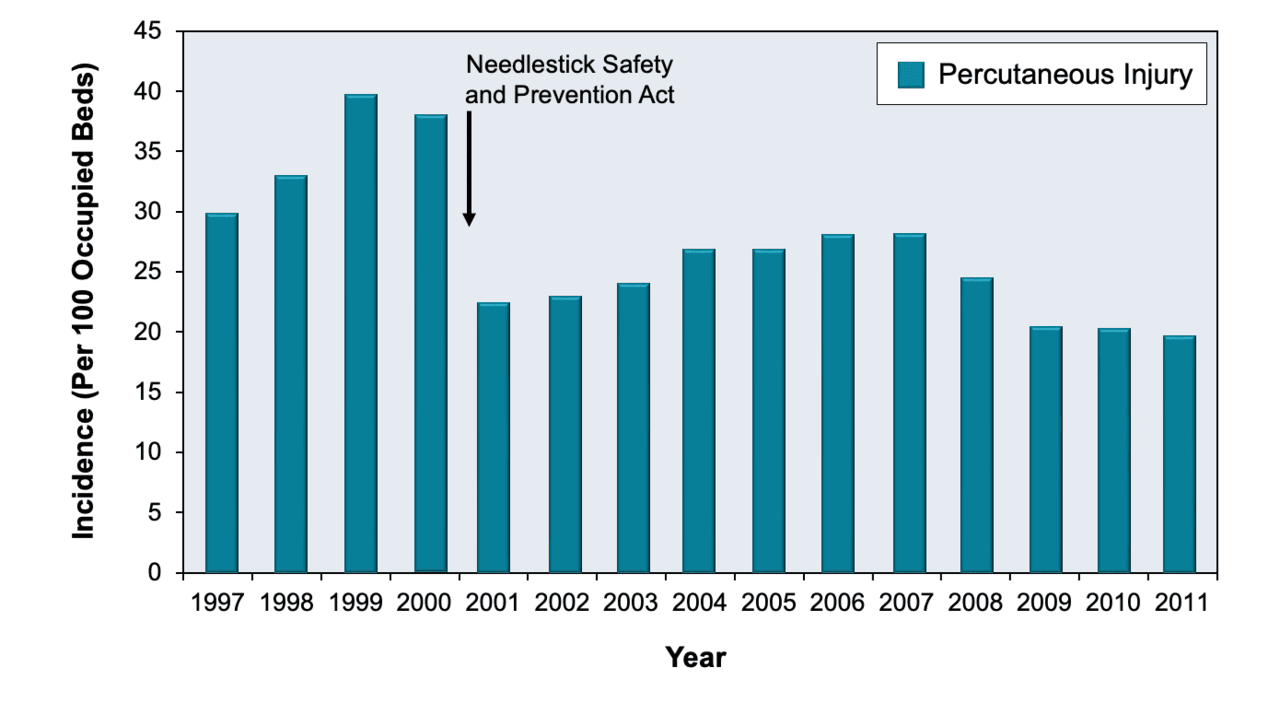
The greatest risk of occupational HBV transmission occurs with a needlestick or sharps-related injury.[4] In the United States, there are approximately 385,000 annual needlestick or sharps-related injuries to hospital-based HCP, many of which go unreported.[11,12,13] Data from the University of Virginia Health System suggest the rate of percutaneous exposures decreased markedly from 1999 to 2011, falling from 39.6 injuries per 100 occupied beds in 1999 to 19.5 injuries per 100 occupied beds in 2011 (Figure 3).[4] Much of this decline was attributed to greater use of effective and safer medical devices, which stemmed from the 2001 Needlestick Safety and Prevention Act and subsequent changes in safety standards implemented by the Occupational Safety and Health Administration (OSHA).[4] Despite these declines, percutaneous exposures remain common, particularly among trainees, with an estimated 18% of trainees sustaining a percutaneous exposure annually.[4,14] Most percutaneous exposures result from needles intended for intramuscular or subcutaneous injections (30.5%) or from suture needles (18.7%).[4,15,16,17] Mucosal exposures occur in approximately 22% of trainees per year, but only 17% of those with a mucosal exposure reported the exposure to occupational health.[4]. In a multi-center cross-sectional survey of HCP, medical students and resident physicians, especially those in surgical fields, had the highest rate of sharps-related injuries, but were least likely to report them to employee health.[18]
Definition of Health Care Personnel (HCP)
According to the CDC, health care personnel (HCP) are all paid and unpaid persons providing health care, or working or training in health care settings, who have reasonably anticipated risks for exposure to infectious material, including blood or body fluids, contaminated medical supplies and equipment, or contaminated environmental surfaces.[4] The CDC guidance on vaccination and postexposure prophylaxis for HBV in HCP pertains to acute care hospitals, long-term care and rehabilitation facilities, medical and dental offices, urgent care centers, dialysis centers, ambulatory surgery centers, emergency medical personnel, and home health workers. Although CDC guidelines do not focus on persons outside of the health care field, similar guidance may be applied to other occupations, such as public safety officers, with risk of exposure to blood and body fluids.[4]
Risk of HBV with Occupational Exposures
Relative Risk of Infectious Body Fluids
The risk of occupational HBV transmission varies significantly based on the type of body fluid involved in the exposure (Table 1).[4] Blood exposure carries the highest risk for HBV transmission, due to higher HBV titers in blood than in other body fluids.[2,4] In addition to blood, cerebrospinal fluid, synovial fluid, pleural fluid, peritoneal fluid, pericardial fluid, and amniotic fluid are considered to present a potential risk of occupational HBV transmission, but these risks are not well quantified.[4] Semen and vaginal secretions have been implicated in the sexual transmission of HBV but have not been described in cases of occupational exposure.[2,4] Other body fluids such as saliva, tears, sputum, urine, and vomitus are not thought to be efficient vehicles for HBV transmission and have not been implicated in occupational exposure, unless contaminated with blood.[2,4]
Relative Risk of Exposure Type
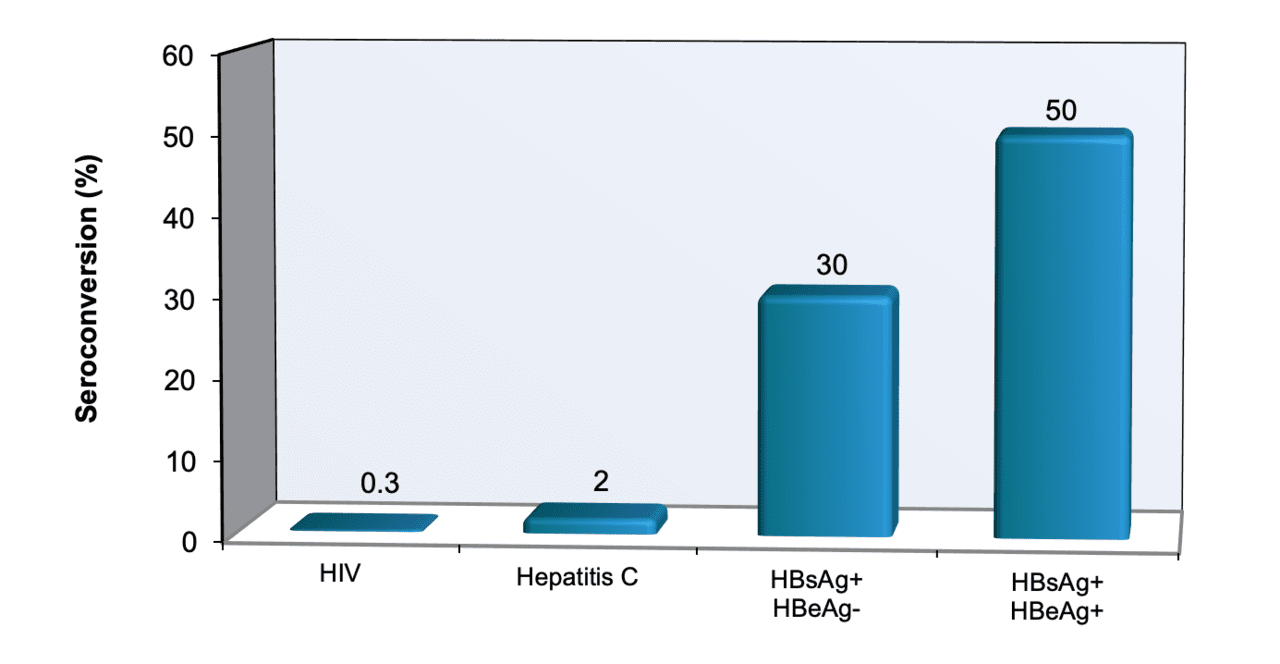
Percutaneous exposure is felt to confer the highest risk for HBV seroconversion. In older studies that were published before the routine use of occupational postexposure prophylaxis, health care workers who sustained a needlestick injury from a needle contaminated with hepatitis B surface antigen (HBsAg)-positive and hepatitis e antigen (HBeAg)-positive blood had a 22 to 31% risk of developing clinical hepatitis and a 37 to 62% risk of developing serologic evidence of HBV infection.[2,4,5,19] When the needle was contaminated with HBsAg-positive/HBeAg-negative blood, the risk of developing clinical hepatitis was lower (1 to 6%), but the risk of developing serologic evidence of HBV infection remained substantial (23 to 37%).[2,4,5] For needlestick occupational exposures to HBV, HCV, or HIV, if no postexposure prophylaxis is administered, the risk of seroconversion to HBV (in a nonimmune person) with a single exposure is substantially higher than the risk of seroconversion to HCV or HIV (Figure 4).[2] Acquisition of HBV following exposure of mucous membranes or non-intact skin to infectious body fluids has been described, but the risk of HBV seroconversion following such events has been poorly quantified. This risk, however, is thought to be lower than the risk conferred by percutaneous exposure.[4] The risk of HBV acquisition following a human bite is also poorly defined.[4]
Initial Approach to Postexposure Prophylaxis
Assessment of Exposure
After occupational exposure to blood or bodily fluids, it is important to determine whether the exposure warrants postexposure prophylaxis to prevent HBV infection. In addition, evaluation and management of occupational HCV and HIV exposure should be part of this process. The decision to administer postexposure prophylaxis to prevent HBV acquisition should be determined by obtaining the following information:[4]
- Type of body fluid involved in the exposure
- Nature of the exposure (e.g., percutaneous, mucous membrane, or contact with nonintact skin)
- HBV status of the source patient
- HBV and immunization status of the health care worker
- Timing of the exposure
Initial Wound Care
Immediate care to the exposure site should occur, including the following:[4]
- For any wound or areas of the skin that have come into contact with blood and/or body fluids, thoroughly wash with soap and water.
- If the exposure involves mucous membranes, thoroughly flush the mucous membranes with water.
- If the exposure involves one or more eyes, irrigate the eye(s) with clean water, saline, or sterile irrigating solution.
- For percutaneous injuries, do not squeeze the injury site.
- For percutaneous injuries, do not scrape or scrub the wound.
- Do not apply antiseptic solutions or caustic agents, such as bleach, to percutaneous or mucous membranes involved in the exposure.
Determining the Type and Nature of the Exposure
As part of the initial evaluation for occupational exposure to HBV, it is important to understand the details of the type of exposure (e.g., percutaneous, mucous membrane, contact with nonintact skin) and the body fluid(s) involved in the exposure. This information helps stratify the risk of acquiring HBV from the exposure, as well as identify exposures that are unlikely to pose any real threat of HBV transmission. For a discussion of the relative risks of exposure type and infectious body fluids, see the section on Risk of Occupational Exposure above.
Determining the HBV Immune Status of the HCP
The postexposure management of health care personnel (HCP) depends on an understanding of their HBV immune status and hepatitis B immunization history. Specific information should include dates of prior HBV vaccinations, post-immunization test results for the level of antibody to HBsAg (anti-HBs), other prior HBV serologic test results, and any history of HBV infection. For persons who have completed a hepatitis B vaccine series, an anti-HBs titer of at least 10 mIU/mL is considered protective.[5,20] If prior anti-HBs testing results are not available, but the HCP has a history of HBV vaccination, the HCP should have an anti-HBs level drawn as soon as possible to determine their HBV immune status.[4,5] It is also helpful to obtain information on any underlying medical conditions that may impact the HCP’s risk for acquiring HBV, such as an underlying immunodeficiency or ongoing receipt of immunosuppressant medications.
Determining the HBV Status of the Source Patient
Following occupational exposure in an HCP, efforts should be made to determine the source patient's hepatitis B status, including HBsAg, anti-HBs, and total antibody to hepatitis B core antigen (total anti-HBc). When the source patient has documented active HBV infection, an effort should be made to obtain the most recent test results for their HBsAg and HBeAg status. If information regarding the source patient's hepatitis B status is unknown and the HCP is not immune to HBV, then testing of the source patient for HBsAg is recommended. Doing so requires obtaining informed consent from the source patient in accordance with state and federal laws.[4] If testing of the source patient is indicated, it should be performed as quickly as possible and should not be delayed while confirming the anti-HBs status of the HCP.[4,5] In cases where the source patient’s HBV status is not known, testing needles or sharps implicated in an exposure is not advised. Such testing could pose a hazard to laboratory personnel handling the sharp object, and the reliability of the results is unknown.[4]
Timing of the Occupational Exposure
As part of the initial evaluation of the HCP, it is important to determine when the exposure took place. When indicated, postexposure prophylaxis for HBV should be started immediately and ideally within 24 hours of exposure. The efficacy of hepatitis B immune globulin (HBIG) has only been studied within a week of exposure, and its effectiveness beyond 7 days is unclear.[4]
Interventions for HBV Occupational Postexposure Prophylaxis
Hepatitis B Vaccine
Ideally, all HCP should have received hepatitis B immunization prior to any potential occupational exposures to HBV. Unfortunately, this does not uniformly occur. In the 2018 National Health Interview Survey, self-reported hepatitis B vaccination coverage was 67.2% among HCP 19 years of age and older.[21,22] Hepatitis B vaccine also has value following occupational exposure to HBV in persons nonimmune to hepatitis B. Indeed, HBV immunization continues to be used as part of occupational postexposure prophylaxis to prevent HBV infection in unimmunized and partially immunized HCP, as well as in HCP who did not respond to an initial hepatitis B vaccine series. In the United States, there are multiple FDA-approved vaccines, including three single-antigen vaccines (Recombivax-HB, Engerix-B, and Heplisav-B) and one hepatitis A-hepatitis B combination vaccine (Twinrix). Although guidelines do not specify the preferential use of one vaccine over the other for HBV postexposure prophylaxis, there is greater experience in the postexposure prophylaxis setting with the older single-antigen Recombivax-HB and Engerix-B vaccines compared to Heplisav-B, and the combination-antigen vaccine, Twinrix (Table 2).[4,5,23] For additional information on different hepatitis B vaccines, see the Topic Review, HBV Immunizations.
Hepatitis B Immune Globulin
Hepatitis B immune globulin (HBIG) is derived from human serum containing high levels of anti-HBs. It provides passive, temporary protection against HBV infection, with the protective effect lasting approximately 3 to 6 months.[4] Following occupational exposure to HBV, if indicated, HBIG is given intramuscularly at a standard dose of 0.06 mL/kg; intravenous administration of HBIG is not recommended. The administration of HBIG is often given at the same time as the hepatitis B vaccine, as a combination approach for HBV postexposure prophylaxis. When doses of HBIG and hepatitis B vaccine are given at the same time, care must be taken to ensure they are given at separate body sites.[4] Typically, HBIG is well tolerated and considered safe, even when used for pregnant or breastfeeding women.[2,4] Serious adverse reactions to HBIG are rare, and there is no evidence that HBIG has ever transmitted HBV or other blood-borne pathogens such as HIV and HCV.[2,4]
Antiviral Agents
Antiviral agents could theoretically be used to prevent HBV infection after an exposure in the same way that antiretroviral therapy is used for HIV postexposure prophylaxis. There are, however, insufficient data and no recommendations for the use of antivirals for HBV postexposure prophylaxis. Accordingly, the antiviral agents that are routinely used to treat persons with chronic HBV infection—entecavir, tenofovir alafenamide, or tenofovir DF—should not be used for the purpose of HBV postexposure prophylaxis. In addition, interferon or peginterferon, which have also been used to treat chronic HBV, should not be used for HBV postexposure prophylaxis.
Management of Occupational Exposure to HBV
The CDC has issued recommendations for postexposure management of HCP following exposure to blood and infectious body fluids, including specific recommendations for persons exposed to HBV (Table 3).[4,5] For persons exposed to HBV, the management depends on the HBsAg status of the source patient and the HBV vaccine status and immunity of the health care worker.
Vaccinated HCP with Vaccine-Induced Immunity
Health care personnel who received a complete hepatitis B vaccine series and have a documented anti-HBs level of 10 mIU/mL or higher are considered vaccine responders and immune to HBV; they are not at risk of acquiring HBV from occupational exposure. In this setting, testing the source patient for HBsAg is not necessary, and postexposure prophylaxis for the HCP is not indicated, regardless of the source's HBsAg status.[4]
Vaccinated HCP who have Not Responded after Two Vaccine Series
Health care personnel with an anti-HBs level less than or equal to 10 mIU/mL after 2 complete hepatitis B vaccine series are considered vaccine nonresponders and are susceptible to HBV infection. Following occupational exposure involving health care personnel who were vaccine nonresponders, the source patient should be tested for HBsAg.
- Source Patient HBsAg Positive: If the source patient is found to be HBsAg positive, or if the HBsAg status of the source patient is unknown, the exposed HCP should receive 2 doses of HBIG. The first dose of HBIG should be given as soon as possible following the exposure, and the second dose should be given 1 month after the first dose.[4] In this setting, repeat vaccination is generally not indicated, given the history of prior nonresponse. If, however, the HCP had not previously received Heplisav-B vaccine, some experts would recommend immunizing these health care personnel with the 2-dose Heplisav-B vaccine series, particularly when considering the enhanced seroconversion rates observed with Heplisav-B vaccine compared to older single-antigen hepatitis B vaccines (e.g., Recombivax-HB and Engerix-B).
- Source Patient HBsAg Negative: If the source patient is found to be HBsAg negative, no postexposure prophylaxis is recommended.[4]
Vaccinated HCP and Response Unknown after Complete Vaccine Series
Following occupational exposure, vaccinated HCP without prior anti-HBs testing (or without knowledge of the prior test results) should have testing for anti-HBs. The source patient, if known, should simultaneously be tested for HBsAg. Testing of both the HCP and source patient should be done as soon as possible.[4,5] If the results of these tests can be obtained within 24 hours, it is reasonable to defer the initial postexposure management until the results return.
- HCP Immune: If the HCP is found to have an anti-HBs titer of 10 mIU/mL or higher, the HCP is considered immune to HBV and no additional postexposure management is needed, regardless of the source patient’s HBsAg status.[4,5]
- HCP Nonimmune and Source Patient HBsAg Positive or HBsAg Status Unknown: If the HCP is found to have an anti-HBs less than 10 mIU/mL, and the source patient is HBsAg positive, or has an unknown HBsAg status, the healthcare personnel should receive a dose of HBIG and a dose of the hepatitis B vaccine, administered as separate sites on the body as soon as possible. The HCP should then complete the remaining doses of this second hepatitis B vaccination series according to the routine recommended schedule. One to two months following the completion of the second hepatitis B vaccine series, the HCP should undergo repeat anti-HBs testing to determine response to the vaccine.[4,5] If the last dose of vaccine is administered within 6 months of HBIG, postvaccination anti-HBs testing should be delayed until at least 6 months after HBIG administration to ensure accurate results.[4,5]
- HCP Nonimmune and Source Patient HBsAg Negative: If the HCP is found to have an anti-HBs titer less than 10 mIU/mL, and the source patient is HBsAg negative, the HCP should receive an additional dose of hepatitis B vaccine, followed by repeat anti-HBs testing in 1 to 2 months. If the HCP’s anti-HBs remains less than 10 mIU/mL, the HCP should receive the remaining doses of the hepatitis B vaccine to complete the series according to the routine vaccination schedule. Repeat anti-HBs testing should be performed 1 to 2 months after completion of the second vaccine series to document immune status.[4]
Unvaccinated or Incompletely Vaccinated HCP
Following an occupational exposure in an HCP who is either unvaccinated or incompletely vaccinated, the source patient should be tested for HBsAg as soon as possible. Anti-HBs testing in the HCP is not necessary in these settings, given that anti-HBs of 10 mIU/mL or greater as a correlate of vaccine-induced protection has only been validated in fully vaccinated individuals.[4,20]
- Source Patient HBsAg Positive or HBsAg Status Unknown: In this setting, the unvaccinated or incompletely vaccinated HCP should receive one dose of HBIG and a dose of the hepatitis B vaccine, at separate injection sites, as soon as possible. The HCP should then complete the remaining doses of hepatitis B vaccine according to the routine vaccination schedule. Anti-HBs testing should then be performed approximately 1 to 2 months after the last dose of vaccine, and at least 6 months following HBIG administration, to document immune status. If the last dose of vaccine is administered within 6 months of HBIG, postvaccination anti-HBs testing should be delayed until at least 6 months after HBIG administration to ensure accurate results.[4]
- Source Patient HBsAg Negative: If the source patient is found to be HBsAg negative, HBIG is not indicated, and the HCP should complete the hepatitis B vaccine series. Anti-HBs testing should be performed 1 to 2 months after vaccination to document immune status.[4]
Monitoring of HCP after Occupational HBV Exposure
Baseline and Follow-up Testing
Indications for Baseline and Follow-Up Testing
After exposure to blood and/or infectious body fluids from a patient who is HBsAg-positive or has an unknown HBsAg status, baseline and follow-up testing for HBV infection should be performed in the following groups of HCP:[4,5]
- HCP with anti-HBs less than 10 mIU/mL
- HCP who are unvaccinated
- HCP who are incompletely vaccinated
Recommended Baseline Tests
Baseline testing should be performed following exposure as quickly as possible and should consist of total anti-HBc.[4,5]
Recommended Follow-Up Tests
Follow-up testing, performed 6 months after the exposure event, should consist of total anti-HBc and HBsAg.[4,5]
Special Precautions to Prevent Secondary Transmission
Following exposure to an HBsAg-positive or HBsAg-unknown source, HCP should refrain from donating blood, plasma, organs, tissue, or semen during the six-month follow-up period. Exposed health care personnel do not need to modify their sexual practices, avoid pregnancy, or stop breastfeeding. Similarly, exposed HCP do not need to modify their patient care or other work-related activities.[4,5]
Efficacy of Occupational Postexposure Prophylaxis for HBV
Postexposure Prophylaxis for HBV in Perinatal Setting
Most of the data on the efficacy of HBIG and hepatitis B vaccine in preventing HBV infection comes from the perinatal setting. A 2006 Cochrane review found that HBIG plus hepatitis B vaccine significantly decreased the risk of vertical transmission when compared to no intervention, with a relative risk of 0.08.[24] When compared to HBV vaccination alone, the same Cochrane review found that HBV vaccine plus HBIG further decreased the rate of perinatal transmission, with a relative risk of 0.54.[24] Several prospective studies have similarly shown high efficacy rates for immunoprophylaxis in infants born to mothers with chronic HBV, with less than 2% of exposed infants developing HBV infection after receipt of both the hepatitis B vaccine and HBIG.[25,26]
Data for Occupational Postexposure Prophylaxis for HBV
There have been no prospective studies comparing HBIG alone, hepatitis B vaccine alone, or HBIG plus hepatitis B vaccine for postexposure prophylaxis in the occupational setting. Retrospective data from Japan does, however, suggest higher efficacy of hepatitis B vaccine plus HBIG for occupational postexposure prophylaxis when compared to HBIG alone (4% versus 11% infection rate).[27] Older prospective studies performed before the availability of HBV vaccines suggested that multiple doses of HBIG alone, started within 7 days of exposure to HBsAg-positive blood, could provide 75% protection against HBV infection, but the efficacy of initial administration of HBIG beyond 7 days of exposure has not been studied.[4,28,29]
Summary Points
- Hepatitis B is of particular concern following occupational exposures, as it can remain infectious on environmental surfaces for at least 7 days and can be transmitted even in the absence of visible blood.
- All HCP who experience a significant occupational exposure to HBV should be urgently evaluated for postexposure prophylaxis.
- Exposure to blood from a person with HBV infection carries the highest risk for transmission, but exposure to cerebrospinal fluid, synovial fluid, pleural fluid, peritoneal fluid, pericardial fluid, and amniotic fluid has also been described in cases of occupational HBV transmission.
- Percutaneous exposure confers the highest risk for HBV seroconversion in susceptible patients, with seroconversion rates ranging from 23 to 62%, depending on the source patient’s HBeAg status.
- HCP who are not immune to HBV should receive postexposure prophylaxis with the hepatitis B vaccine and/or HBIG. The type of postexposure prophylaxis is determined by the HBV immune status of the HCP and the HBsAg status of the source patient.
- Following an occupational exposure, HCP who are nonimmune (anti-HBs less than 10 mIU/mL), unvaccinated, or incompletely vaccinated should undergo baseline testing with anti-HBc and follow-up testing in 6 months with anti-HBc and HBsAg.
Citations
- 1.Gerberding JL. Management of occupational exposures to blood-borne viruses. N Engl J Med. 1995;332:444-51.[PubMed Abstract] -
- 2.U.S. Public Health Service. Updated U.S. Public Health Service Guidelines for the Management of Occupational Exposures to HBV, HCV, and HIV and Recommendations for Postexposure Prophylaxis. MMWR Recomm Rep. 2001;50:1-52.[PubMed Abstract] -
- 3.Bond WW, Favero MS, Petersen NJ, Gravelle CR, Ebert JW, Maynard JE. Survival of hepatitis B virus after drying and storage for one week. Lancet. 1981;1:550-1.[PubMed Abstract] -
- 4.Schillie S, Murphy TV, Sawyer M, et al. CDC guidance for evaluating health-care personnel for hepatitis B virus protection and for administering postexposure management. MMWR Recomm Rep. 2013;62:1-19.[PubMed Abstract] -
- 5.Schillie S, Vellozzi C, Reingold A, et al. Prevention of Hepatitis B Virus Infection in the United States: Recommendations of the Advisory Committee on Immunization Practices. MMWR Recomm Rep. 2018;67:1-31.[PubMed Abstract] -
- 6.Denes AE, Smith JL, Maynard JE, Doto IL, Berquist KR, Finkel AJ. Hepatitis B infection in physicians. Results of a nationwide seroepidemiologic survey. JAMA. 1978;239:210-12.[PubMed Abstract] -
- 7.Dienstag JL, Ryan DM. Occupational exposure to hepatitis B virus in hospital personnel: infection or immunization? Am J Epidemiol. 1982;115:26-39.[PubMed Abstract] -
- 8.Segal HE, Llewellyn CH, Irwin G, Bancroft WH, Boe GP, Balaban DJ. Hepatitis B antigen and antibody in the U.S. Army: prevalence in health care personnel. Am J Public Health. 1976;66:667-71.[PubMed Abstract] -
- 9.Beltrami EM, Williams IT, Shapiro CN, Chamberland ME. Risk and management of blood-borne infections in health care workers. Clin Microbiol Rev. 2000;13:385-407.[PubMed Abstract] -
- 10.Mahoney FJ, Stewart K, Hu H, Coleman P, Alter MJ. Progress toward the elimination of hepatitis B virus transmission among health care workers in the United States. Arch Intern Med. 1997;157:2601-5.[PubMed Abstract] -
- 11.Denault D, Gardner H. OSHA Bloodborne Pathogen Standards. [Updated 2023 Jul 20]. In: StatPearls [Internet]. Treasure Island (FL): StatPearls Publishing; 2025 Jan-.[StatPearls] -
- 12.Centers for Disease Control and Prevention (CDC). Workbook for Designing, Implementing, and Evaluating a Sharps Injury Prevention Program. 2008.[CDC] -
- 13.Phillips EK, Conaway MR, Jagger JC. Percutaneous injuries before and after the Needlestick Safety and Prevention Act. N Engl J Med. 2012;366:670-1.[PubMed Abstract] -
- 14.Dement JM, Epling C, Ostbye T, Pompeii LA, Hunt DL. Blood and body fluid exposure risks among health care workers: results from the Duke Health and Safety Surveillance System. Am J Ind Med. 2004;46:637-48.[PubMed Abstract] -
- 15.Boal WL, Leiss JK, Sousa S, Lyden JT, Li J, Jagger J. The national study to prevent blood exposure in paramedics: exposure reporting. Am J Ind Med. 2008;51:213-22.[PubMed Abstract] -
- 16.Gershon RR, Pearson JM, Sherman MF, Samar SM, Canton AN, Stone PW. The prevalence and risk factors for percutaneous injuries in registered nurses in the home health care sector. Am J Infect Control. 2009;37:525-33.[PubMed Abstract] -
- 17.Gershon RR, Qureshi KA, Pogorzelska M, et al. Non-hospital based registered nurses and the risk of bloodborne pathogen exposure. Ind Health. 2007;45:695-704.[PubMed Abstract] -
- 18.Yun J, Umemoto K, Wang W, Vyas D. National Survey of Sharps Injuries Incidence Amongst Healthcare Workers in the United States. Int J Gen Med. 2023;16:1193-1204.[PubMed Abstract] -
- 19.Werner BG, Grady GF. Accidental hepatitis-B-surface-antigen-positive inoculations. Use of e antigen to estimate infectivity. Ann Intern Med. 1982;97:367-9.[PubMed Abstract] -
- 20.Jack AD, Hall AJ, Maine N, Mendy M, Whittle HC. What level of hepatitis B antibody is protective? J Infect Dis. 1999;179:489-92.[PubMed Abstract] -
- 21.Lu PJ, Hung MC, Srivastav A, et al. Surveillance of Vaccination Coverage Among Adult Populations -United States, 2018. MMWR Surveill Summ. 2021;70:1-26.[PubMed Abstract] -
- 22.Williams WW, Lu PJ, O'Halloran A, et al. Surveillance of Vaccination Coverage among Adult Populations - United States, 2015. MMWR Surveill Summ. 2017;66:1-28.[PubMed Abstract] -
- 23.Schillie S, Harris A, Link-Gelles R, Romero J, Ward J, Nelson N. Recommendations of the Advisory Committee on Immunization Practices for Use of a Hepatitis B Vaccine with a Novel Adjuvant. MMWR Morb Mortal Wkly Rep. 2018;67:455-8.[PubMed Abstract] -
- 24.Lee C, Gong Y, Brok J, Boxall EH, Gluud C. Hepatitis B immunisation for newborn infants of hepatitis B surface antigen-positive mothers. Cochrane Database Syst Rev. 2006;:CD004790.[PubMed Abstract] -
- 25.Centers for Disease Control and Prevention (CDC). Postvaccination serologic testing results for infants aged ≤24 months exposed to hepatitis B virus at birth: United States, 2008-2011. MMWR Morb Mortal Wkly Rep. 2012;61:768-71.[PubMed Abstract] -
- 26.Schillie S, Walker T, Veselsky S, et al. Outcomes of infants born to women infected with hepatitis B. Pediatrics. 2015;135:e1141-7.[PubMed Abstract] -
- 27.Mitsui T, Iwano K, Suzuki S, et al. Combined hepatitis B immune globulin and vaccine for postexposure prophylaxis of accidental hepatitis B virus infection in hemodialysis staff members: comparison with immune globulin without vaccine in historical controls. Hepatology. 1989;10:324-7.[PubMed Abstract] -
- 28.Grady GF, Lee VA, Prince AM, et al. Hepatitis B immune globulin for accidental exposures among medical personnel: final report of a multicenter controlled trial. J Infect Dis. 1978;138:625-38.[PubMed Abstract] -
- 29.Seeff LB, Zimmerman HJ, Wright EC, et al. A randomized, double blind controlled trial of the efficacy of immune serum globulin for the prevention of post-transfusion hepatitis. A Veterans Administration cooperative study. Gastroenterology. 1977;72:111-21.[PubMed Abstract] -
Additional References
- Floreani A, Baldo V, Cristofoletti M, et al. Long-term persistence of anti-HBs after vaccination against HBV: an 18 year experience in health care workers. Vaccine. 2004;22:607-10.[PubMed Abstract] -
- Gara N, Abdalla A, Rivera E, et al. Durability of antibody response against hepatitis B virus in healthcare workers vaccinated as adults. Clin Infect Dis. 2014;60:505-13.[PubMed Abstract] -
- Kidd-Ljunggren K, Holmberg A, Bläckberg J, Lindqvist B. High levels of hepatitis B virus DNA in body fluids from chronic carriers. J Hosp Infect. 2006;64:352-7.[PubMed Abstract] -
- Kubba AK, Taylor P, Graneek B, Strobel S. Non-responders to hepatitis B vaccination: a review. Commun Dis Public Health. 2003;6:106-12.[PubMed Abstract] -
- Louther J, Feldman J, Rivera P, Villa N, DeHovitz J, Sepkowitz KA. Hepatitis B vaccination program at a New York City hospital: seroprevalence, seroconversion, and declination. Am J Infect Control. 1998;26:423-7.[PubMed Abstract] -
- Sjogren MH. Prevention of hepatitis B in nonresponders to initial hepatitis B virus vaccination. Am J Med. 2005;118 Suppl 10A:34S-39S.[PubMed Abstract] -
- Van Der Meeren O, Peterson JT, Dionne M, et al. Prospective clinical trial of hepatitis B vaccination in adults with and without type-2 diabetes mellitus. Hum Vaccin Immunother. 2016;12:2197-2203.[PubMed Abstract] -
- West DJ. The risk of hepatitis B infection among health professionals in the United States: a review. Am J Med Sci. 1984;287:26-33.[PubMed Abstract] -
Figures



Tables
| Risk Category | Body Fluid |
| High |
|
| Potentially Infectious |
|
| Transmitted sexually (occupational transmission not described) |
|
| Very low risk (unless contaminated with blood) |
|
| Not considered infectious (unless contaminated with blood) |
|
- Schillie S, Murphy TV, Sawyer M, et al. CDC guidance for evaluating health-care personnel for hepatitis B virus protection and for administering postexposure management. MMWR Recomm Rep. 2013;62:1-19. [PubMed Abstract]
| Single-Antigen Vaccines | Combination Vaccine | ||||||||||
| Recombivax-HB | Engerix-B | Heplisav-B | Twinrix | ||||||||
| *Dose (µg) | Vol (mL) | *Dose (µg) | Vol (mL) | *Dose (µg) | Vol (mL) | *Dose (µg) | Volume | ||||
| Standard Dosing | |||||||||||
| 10 | 1.0 | 20 | 1.0 | 20 | 0.5 | 20† | 1.0 | ||||
| Dosing in Hemodialysis Patients and Other Immunocompromised Persons | |||||||||||
| 40# | 1.0# | 40 | 2.0 | N/A | N/A | N/A | N/A | ||||
| Abbreviation: N/A = not applicable (not approved for use). *Dose of hepatitis B surface antigen (HBsAg) in each dose of vaccine #The Recombivax-HB Dialysis Formulation has 40 µg of HBsAg per 1 mL |
|||||||||||
| HCP Status | Postexposure Testing | Postexposure Prophylaxis | Postvaccination serologic testing | |||
| Source Patient (HBsAg) | HCP testing (anti-HBs) | HBIG | Vaccination | |||
| Documented responder after complete series (≥3 doses) | No action needed | |||||
| Documented nonresponder after two complete series | Positive/unknown | Not indicated | HBIG x 2 separated by 1 month | __ | N/A | |
| Negative | No action needed | |||||
| Response unknown after complete series | Positive/unknown | <10 mIU/mL | HBIG x 1 | Initiate revaccination | Yes | |
| Negative | <10 mIU/mL | None | Initiate revaccination | Yes | ||
| Any result | ≥10 mIU/mL | No action needed | ||||
| Unvaccinated/incompletely vaccinated or persons who refuse HBV vaccine | Positive/unknown | Not indicated | HBIG x 1 | Complete vaccination | Yes | |
| Negative | Not indicated | None | Complete vaccination | Yes | ||
| Abbreviations: HCP = health care personnel; HBsAg = hepatitis B surface antigen; anti-HBs = antibody to hepatitis B surface antigen; HBIG = hepatitis B immune globulin; N/A = not applicable. | ||||||
- Schillie S, Vellozzi C, Reingold A, et al. Prevention of Hepatitis B Virus Infection in the United States: Recommendations of the Advisory Committee on Immunization Practices. MMWR Recomm Rep. 2018;67:1-31. [PubMed Abstract]